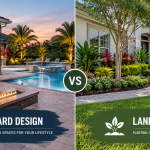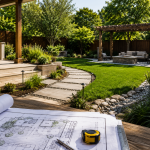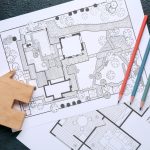
You can invest and spend a thousand dollars on a beautiful fire pit, a custom pool, or high-end outdoor finishes and still end up frustrated with the final result. The problem is not usually the amount of money invested; it is the order in which that money gets spent.
Many homeowners begin a backyard remodel the same way they would approach a backyard makeover—by focusing on the most exciting upgrades. It is easy to picture weekend gatherings around a new paver patio or imagine relaxing under a pergola. Yet, some of the most important investments happen beneath the surface, where they are far less visible.
In Florida—where heat, heavy rain, unique drainage issues, and year-round outdoor use create distinct environmental challenges—prioritizing the right improvements first maximizes both your daily enjoyment and long-term property value. Whether you live in Tampa, Sarasota, Winter Garden, or another growing community, this guide breaks down where to invest first, what can wait, and how to build an outdoor environment that performs as well as it looks.
Key Takeaways
|
Why Homeowners Spend Money in the Wrong Places
The most common budgeting mistake is prioritizing highly visible features before addressing foundational needs. Because online galleries and social media platforms exclusively showcase flawless, finished projects, you rarely see the intensive grading work, drainage corrections, utility preparation, or structural improvements that made those spaces possible.
As a result, homeowners naturally build their wish lists around visually exciting elements like luxury pools, custom fire pits, outdoor kitchens, decorative landscaping, and stylish entertainment spaces. There is absolutely nothing wrong with wanting these additions, but a major challenge begins when they are installed before addressing the underlying site conditions and overall functionality.
The Illusion of a Perfect Yard
Appearance alone does not create a successful outdoor environment. A backyard can look stunning in a photograph, but still suffer from severe functional problems, such as:
Standing water and erosion after typical Florida storms
Poor traffic flow and limited usable space
Areas that remain muddy and unusable throughout the year
Uncomfortable, direct sun exposure that ruins afternoon usability
Imagine investing heavily in a beautiful custom seating area, only to discover that the intense summer heat makes it unbearable for much of the day. Or worse, installing expensive tropical plants before fixing a grading issue, resulting in water pooling that eventually drowns and damages them. The goal of a remodel is not necessarily to spend less money, but to spend it in the right sequence.
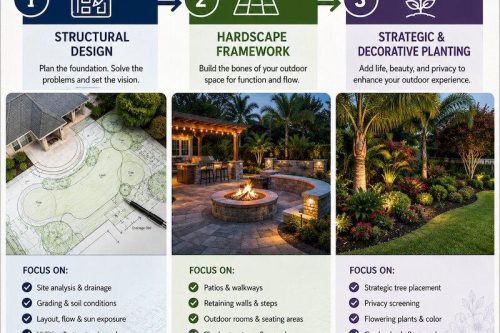
Step 1: Fix What Limits the Property (The Foundation)
The very first investment should always solve the functional flaws holding your yard back. Before adding any luxury upgrades, evaluate your property’s baseline structural needs.
1. Drainage and Water Management
Florida’s climate will expose drainage weaknesses incredibly fast. Heavy rainstorms often reveal problems that are easy to overlook during dry weather, such as standing water, soil erosion, saturated planting beds, or water collecting dangerously close to the home’s foundation. While drainage improvements may not be the most exciting part of a remodel, they protect every single dollar you invest moving forward. Ignoring water management increases your repair costs later and significantly shortens the lifespan of hardscape and landscape installations.
2. Site Preparation and Structural Integrity
Every successful outdoor project begins with proper site preparation, which may include grading, excavation, utility planning, and soil stabilization. The condition and compaction of your soil directly affect how patios, walkways, and structures perform over time. Furthermore, any existing structural problems—such as settling patios, cracked surfaces, failing retaining walls, or unsafe walking areas—must be repaired first to establish a safe, reliable baseline for the rest of the project.
Step 2: Invest in the Areas You Will Use Most
The smartest investments are those that improve how you use your own backyard every day rather than support idealized, occasional scenarios. Not every feature provides equal value, so it helps to ask yourself a simple question: How do we actually want to use this outdoor space?
Whether your priority is family gatherings, outdoor dining, poolside relaxation, or gardening, your answer should drive every major design decision. Reviewing different backyard designs can also help clarify which features deserve immediate investment and which can wait for a future phase of the project.
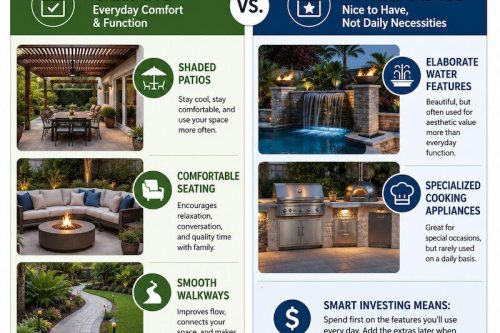
Many homeowners create an expansive wish list that includes every appealing feature they have ever seen, but the reality is that only a handful of those features will receive regular use. A comfortable, well-protected patio where your family gathers every weekend provides far more practical value than an elaborate addition used only a few times a year. Prioritize daily comfort over occasional novelty.
Step 3: Backyard Remodel Priority #1 is Building the Hardscaping Framework
Hardscaping creates the greatest functional impact early in a project by establishing the physical framework that supports everything else.
Patios: A well-designed paver patio often becomes the literal center of outdoor activity, supporting dining, lounging, and entertaining. Without a solid hardscape foundation, outdoor areas feel disconnected and underutilized. In many cases, expanding or improving the patio footprint creates a much larger lifestyle upgrade than adding decorative elements.
Walkways: Movement matters. Whether built with pavers, a gravel path, pea gravel, or decorative concrete, pathways help connect different zones of the backyard while improving traffic flow and usability. A properly planned path also reduces wear and tear on your lawn and prevents muddy feet from entering the house.
Retaining Walls: In sloped or uneven conditions, retaining walls serve both functional and aesthetic purposes. They manage grade changes, mitigate erosion, and help define distinct gathering areas, making them one of the most valuable structural investments you can make.
Step 4: Prioritize Shade and Climate Comfort
In Florida, comfort dictates how often you actually use your yard. Without proper protection from the elements, even the most impressive luxury upgrades will sit completely abandoned for months out of the year.
The intense Florida sun, high temperatures, strong UV exposure, and extended summer conditions dramatically influence how outdoor environments perform. A seating area that feels lovely at 9:00 AM can easily become an unlivable oven by 2:00 PM. Evaluating sun patterns before construction helps you avoid costly placement mistakes.
Investing in pergolas, covered patios, pavilions, or shade structures extends the usability of your yard, transforming an underutilized, baking-hot lawn into one of the most popular and frequently visited parts of your entire property.
Step 5: Add High-Value Luxury Features
Luxury features perform best and last longest when the fundamentals are already locked into place. Once your drainage, layout, hardscape framework, and shade structures have been addressed, you can confidently layer in higher-end amenities.
Outdoor Kitchens
An outdoor kitchen significantly elevates your entertaining potential. Additions like built-in grills, refrigeration, prep stations, and storage work best when seamlessly integrated into a pre-established layout with the correct utility lines already run underneath.
Fire Features
A custom fire pit or fireplace acts as a natural social focal point. Fire features help give a natural gathering area and often perform best when incorporated into a comfortable, well-planned seating space.
Pools and Entertainment Areas
A swimming pool can dramatically change how you interact with your outdoor environment. However, a pool should complement the overall design of your yard rather than dictate it. Evaluating your circulation paths, seating areas, shade, and support spaces before digging the pool always leads to a superior, more cohesive final result.
Step 6: Use Landscaping as the Finishing Layer
Landscaping is most effective when it enhances a functional design. Too many homeowners treat planting as the starting point of a remodel rather than the finishing layer.
Functional Greenery
Strategic planting should serve practical, everyday purposes. You can utilize specific trees, shrubs, and hedges for privacy screening from neighbors, natural shade creation, wind protection, or visual separation between different zones of the yard.
Visual Refinements
Once the structural elements and functional plants are positioned, finish the project with cosmetic details that elevate the character of the space. This is the time for decorative mulch, accent flowers, smaller plants, garden borders, and specialty garden beds. A strong landscape design supports the overall architectural vision of the yard rather than competing with it.
The Strategic Master Plan: A Phased Approach
Many homeowners achieve much better financial and functional outcomes by approaching their backyard remodel in clear, deliberate phases. A phased approach also helps spread a landscaping budget across multiple stages instead of forcing every improvement into a single construction cycle. This reduces immediate budget pressures while allowing each stage of construction to build logically upon the last.
Month 1: Phase 1: Foundation & Function
Focus entirely on the elements beneath the surface and underfoot. This includes correcting drainage, site excavation, grading, utility planning (running lines for gas, water, and electricity), and building core hardscape features like patios and walkways.Month 2-3: Phase 2: Structures & Comfort
Introduce the elements that make the yard livable. Install pergolas, pavilions, or covered gathering spaces. Once shelter is established, construct your high-value features like outdoor kitchens, fire pits, or pool entertainment spaces.Month 4: Phase 3: Landscaping & Finishing Touches
Complete the project with the final aesthetic layer. Install privacy hedges, ornamental plantings, decorative garden borders, landscape lighting, and final styling enhancements to tie the entire environment together.
Spend with Purpose, Not Just Preference
The most successful backyard remodel is not necessarily the one with the biggest budget. Whether the goal is a complete remodel or a simple backyard makeover, the best results come from prioritizing improvements that create lasting usability, comfort, and performance.
When drainage, site conditions, hardscaping, and shade are addressed first, every future investment becomes significantly more effective. Outdoor kitchens work better when positioned correctly. Pools feel integrated rather than dropped in out of nowhere. Landscaping remains healthier because the soil drains properly. The entire environment simply functions more naturally. A thoughtful spending strategy helps you avoid costly, frustrating rework and creates a smoother project experience from start to finish.
At Creative Outdoor Florida, every project begins by identifying exactly what will create the greatest long-term impact for your specific property and lifestyle. A clear, sequential plan ensures that every dollar you invest moves you closer to a genuinely functional, beautiful, and enjoyable outdoor space.
Frequently Asked Questions
Drainage, grading, and structural issues should typically be addressed first. Fixing foundational problems helps protect future investments and creates a stable base for patios, landscaping, pools, and other outdoor features.
In most cases, a patio should come first. Hardscaping establishes the layout and traffic flow of the space, while landscaping is usually added afterward to complement the finished design and avoid unnecessary rework.
For many Florida homeowners, yes. Pergolas, covered patios, and shade structures often increase comfort and usability more than decorative upgrades because they help outdoor spaces stay functional during hot weather.
Yes. Many projects are completed in stages, starting with site preparation and hardscaping, followed by structures and major features, then landscaping and finishing details. A phased approach can make larger projects easier to manage financially.
Start by identifying the areas you use most often. Features that improve daily comfort, functionality, and outdoor living typically provide more long-term value than upgrades used only occasionally.