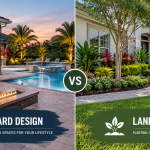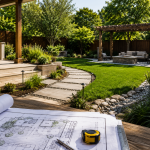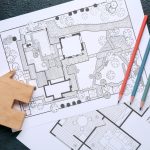
Most backyard remodels don’t fall apart because of the budget. They fall apart because the balance feels off.
Too much patio or concrete, and the outdoor space feels hot and flat. Too much lawn, too many plants, or too many scattered garden beds, and the space starts to feel unused or disconnected. Somewhere in the middle is where a backyard actually works, and that’s where the 70/30 rule in backyard design usually comes in.
But here’s the thing, most guides don’t tell you. Florida isn’t a “follow the rule” kind of place. Between heat, rain, soil conditions, and how people actually use their yard, the right layout shifts.
If you’re planning a remodel, the goal isn’t just to follow a formula. It’s to create a backyard that feels right every time you step outside.
What Is the 70/30 Rule in Backyard Design?
The 70/30 rule gets talked about a lot in backyard design, but here’s where it gets a little confusing.
Some designers define it as 70% hardscape and 30% softscape. More patio, more usable space, less maintenance. Others flip it, arguing for 70% greenery to keep the yard cooler, softer, and more natural.
So which one is right?
In reality, both exist. It just depends on how the space is used.
In many modern Florida homes, especially in places like Tampa or Orlando, homeowners tend to lean toward more hardscape. Bigger patios, pool decks, and outdoor kitchens take priority because the backyard functions more like an extension of the house.
That’s where the rule becomes less of a rule and more of a guideline.
You’re not choosing a number. You’re deciding how you want the outdoor space to feel and function. In Florida, that usually means balancing a great party space with enough shade to actually enjoy it.
Why the 70/30 Rule Works for Many Backyards
For many homeowners, the 70/30 rule works because it gives structure to what can otherwise feel like a blank canvas. Without it, people either overbuild or leave too much unused ground. This rule helps you avoid both.
Creates a Functional Entertainment Space
You need usable space. That’s where hardscape comes in.
A well-sized patio or paver area gives you room for seating, dining, and maybe an outdoor kitchen. In places like Tampa or Orlando, where people actually use their backyard year-round, this matters.
Example:
A 600 sq ft paver patio with a grill station and seating
Surrounding garden beds with shrubs and native plants to soften the edges
You get a function without losing that natural feel.
Prevents Overcrowded Landscaping
Too many plants, especially when you keep repeating the same plant, can make a yard feel cluttered fast.
The 70/30 approach helps you:
Limit overplanting
Keep beds clean and intentional.
Arrange plants in odd-numbered groupings to create a more natural, less staged look.
Instead of stuffing everything into one area, you spread different areas of greenery across the yard. That creates better flow and a more engaging outdoor design.
Helps First-Time Remodelers Avoid Overdesign
If you’re not a designer, it’s easy to go too far.
You might add too many features, too many materials, or mix styles that don’t work together. The 70/30 rule acts like guardrails.
It keeps the layout simple:
Defined paths
Clear lines
Balanced structure between hardscape and softscape
For a first-time remodel, that’s huge. It gives you direction without overcomplicating the process.
Where the 70/30 Rule Falls Short
Here’s where things get real. The 70/30 rule sounds good on paper, but in Florida, it doesn’t always hold up. Once you factor in our humidity, the way heat radiates off stone, and actual site conditions, the formula starts to break. And even among designers, there is no universal agreement on which way the ratio should lean because in the South, every yard behaves differently.
Florida Heat Changes Everything
Hardscape holds heat. A lot of it.
If 70% of your yard is concrete, pavers, or stone, expect that surface to stay hot, especially in summer. In cities like Sarasota or Fort Myers, that heat can make your outdoor space uncomfortable during peak hours.
Adding more trees, grasses, and native plants can naturally cool things down. If you’re looking for budget-friendly ways to transform your backyard with greenery, focusing on shade-tolerant species is a great start.
Pool Layouts Already Dominate the Space
In Florida, many backyards revolve around a pool.
Once you add:
Pool shell
Decking
Safety fences
Walkable paths
You’re already leaning closer to an 80/20 split.
Trying to force a 70/30 ratio can shrink your usable space or make the pool feel cramped. A better approach is designing around the pool first, then layering in plants, mulch, and garden beds where they make sense.
Small Yards Need a Different Approach
In tighter lots, like parts of Winter Park or Lake Nona, too much hardscape can make the yard feel boxed in.
Instead of a heavy patio, you might:
Use turf or ground cover.
Add vertical garden beds.
Incorporate shrubs and flowers for visual interest.
Sometimes a 60/40 split works better because it creates breathing room.
Lifestyle Matters More Than the Rule
At the end of the day, your yard should match your life, not a ratio.
If you love hosting:
More patio
Larger seating areas
Outdoor kitchen setup
If you enjoy a more natural feel:
More plants, wildflowers, and perennials
Habitat-friendly design for birds, butterflies, and insects
The difference comes down to how you use the space. The rule doesn’t account for that, you do.
Better Backyard Layout Ratios for Florida Homes
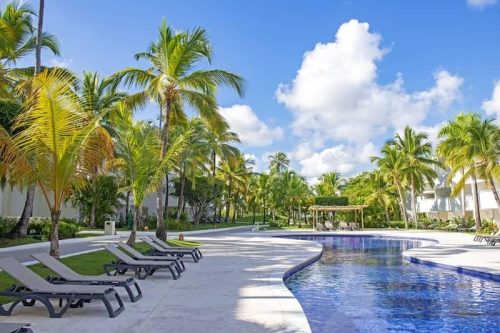
Instead of locking into one formula, it’s better to think in ranges. Different homes, different needs. Here’s how that usually plays out across Florida.
60/40 Layout (More Green, Cooler Feel)
This works well if you prefer a softer, more natural garden design.
Best for:
Shaded yards
Families with kids
Homes that want more lawn or plants
Use a mix of:
Native plants and select non native species (used carefully)
Layered shrubs, flowers, and grasses
Seasonal rotation with annuals for year-round interest
You get texture, movement, and a more relaxed feel.
70/30 Layout (Balanced Use)
This is the classic approach.
It works when you want:
A defined patio
Clean paths and transitions
Enough greenery to soften edges
Think:
Paver patio near the house
Structured beds with mulch and grouped plants
Repeating plant patterns without overusing the same plant
It’s balanced. Easy to maintain. Still looks finished.
80/20 Layout (Entertainment-Focused Design)
This is common in Florida, especially with pools.
Best for:
Outdoor kitchens
Large gatherings
Minimal maintenance
Design focus:
Larger hardscape footprint
Clean lines and strong structure
Strategic placement of plants for contrast
You still include greenery, but it supports the layout rather than dominating it.
If the existing pool deck is starting to look worn, revamping the surface with stamped concrete (for example) can help bring that 80/20 layout back into balance without a full teardown.
How to Decide the Right Balance for Your Backyard
There’s no perfect ratio. But there is a right fit for your yard.
Start with the basics:
How big is the space?
Is there a pool involved?
How much maintenance do you prefer?
What are your soil and drainage conditions?
Florida soil and site conditions matter more than people think. Sandy dirt, heavy rain, and heat all affect how your plants grow and how your landscape holds up.
Then think about use:
Hosting vs relaxing
Kids vs low-maintenance living
Sun vs shade
If you stay informed and look at real examples, not just ideas. You’ll start to see what fits your yard. That’s when your backyard design starts to feel intentional.
Why Professional Design Matters More Than Any Rule
Rules help. But they don’t solve real problems.
Every yard has quirks:
Grading issues
Drainage challenges
Awkward layouts
Existing structures
They think about:
Flow between different areas
Long-term plant growth (roots, spacing, spread)
Materials that hold up in Florida weather
And here’s something most homeowners don’t realize—local codes can limit your design. In many Florida cities, there are strict ‘impervious surface’ limits on how much concrete or stone you can install. These aren’t just red tape. They are there to prevent your yard (and your neighbor’s) from flooding during a heavy downpour.
Good outdoor design isn’t about copying a rule. It’s about working within real-world constraints while still creating something that feels natural.
That’s the difference between a yard that looks good on day one and one that still works years later.
Design a Backyard That Actually Works for Florida Living
A backyard shouldn’t feel forced to follow a formula.
The 70/30 rule is a helpful starting point, but the best spaces come from understanding how you actually use your yard. Shade, layout, materials, and plant choices all play a role in how that space feels day to day.
If you’re planning a remodel, don’t just explore rules. Explore what actually works. A well-designed backyard doesn’t just look good. It makes the entire space feel right.